
Organizations looking to unlock the full potential of their data must choose the right platform for large-scale data processing and analytics. Microsoft Fabric and Azure Synapse are Microsoft’s modern data platforms designed to support firms in managing, analyzing, and achieving value from data. Both platforms support data engineering, business intelligence, and data warehousing. However, they differ in capabilities, architectures, and how organizations use them.
Businesses can also use Azure Synapse Analytics services to design scalable data solutions for complex analytics. Advanced data platforms play a necessary role in improving business intelligence, allowing data-driven decision-making, supporting AI readiness, and strengthening data governance.
However, selection between Microsoft Fabric and Azure Synapse depends on several factors that include business size, data strategy, existing data architectures, and long-term technology goals. Understanding the microsoft fabric vs azure synapse comparison allows business leaders to choose the platform that best aligns with the firm’s needs.
What Is Microsoft Fabric?
Microsoft Fabric is the end-to-end analytics platform that brings data science, data warehousing, data engineering, real-time analytics, and BI into one environment. It uses OneLake for unified data storage and integrates with Power BI to support businesses in simplifying their data analytics and management. More than 19,000 organizations used this said by the report in March 2025.
✧ Key Features of Microsoft Fabric
Microsoft Fabric offers OneLake, Data Factory, Data Warehouse, Data Science, Data Engineering, real-time intelligence, and Power BI integration. These capabilities support teams in managing data, building analytical workflows, generating metrics, and supporting valuable business decisions through a unified platform.
✧ Who Is Microsoft Fabric Best For?
Microsoft Fabric helps firms seeking unified analytics, organizations using Power BI, and teams aiming to simplify data architecture. It also benefits companies preparing for AI adoption and advanced analytics by connecting data workflows, reporting, and analytical capabilities within one platform. The Apollo hospitals reported 25% of reduction in manual work and 60% increment in conversion after adopting Microsoft Fabric.
What Is Azure Synapse?
Azure Synapse is the integrated analytics service that combines enterprise data warehousing, big data analytics, Apache Spark, and data integration. It allows firms to analyze large and complex datasets using both Spark-based and SQL workloads. It allows firms to analyze large and complex datasets using both SQL and Spark-based workloads. It is suitable for organizations that need scalable analytics and robust data processing capabilities.
✧ Key Features of Azure Synapse
Azure Synapse covers serverless SQL, SQL pools, Apache Spark, data integration pipelines, data warehousing, and big data analytics. Firms can use Azure Synapse analytics consulting to design, manage, and optimize Synapse environments based on their data architecture, performance, workloads, and business needs.
✧ Who Is Azure Synapse Best For?
Azure synapse analytics services are best suited for firms with established Azure data environments and mature data warehouse needs. It’s a good choice for enterprises already invested in Synapse or those looking for control over data workloads. It’s also suitable for firms that need control over performance, analytics processes, and infrastructure across complex enterprise data environments.
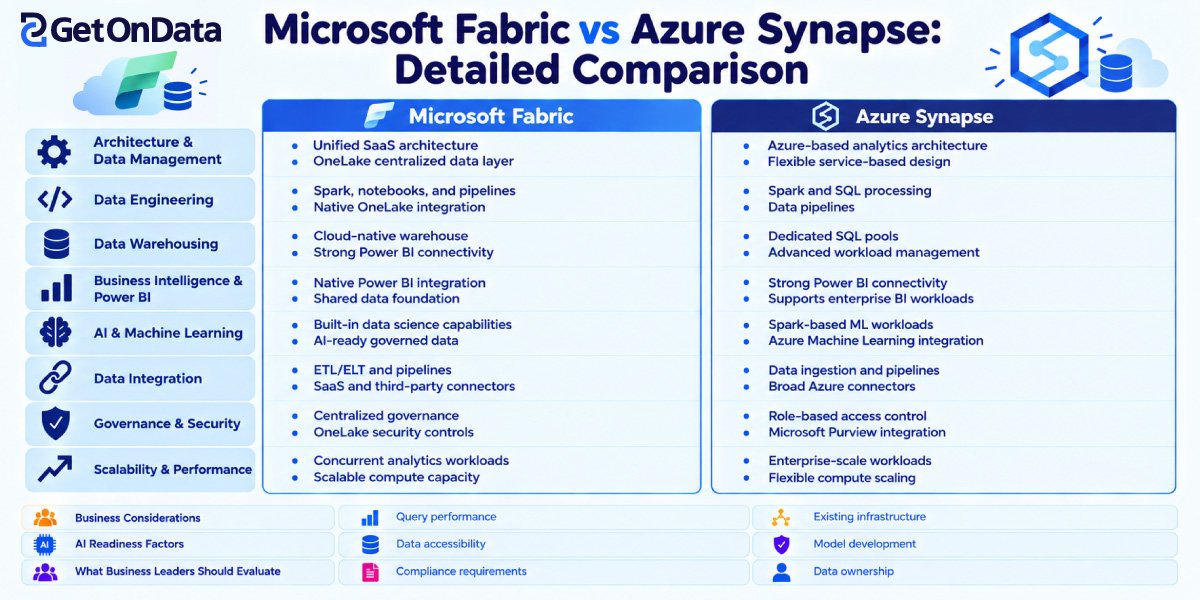
Microsoft Fabric vs Azure Synapse: Detailed Comparison
✧ Architecture and Data Management
➔ Microsoft Fabric
Microsoft data fabric consulting services uses a unified SaaS architecture that brings various analytics workloads into a single environment. OneLake offers a unified data layer, allowing reduced data duplication. Teams can access and work with the same data across engineering, warehousing, analytics, and BI workloads.
➔ Azure Synapse
Azure Synapse uses an Azure-based analytics architecture with multiple services and workloads for various data needs. The following approach offers better architectural flexibility and supports strong integration with Azure data services. It allows enterprises to design solutions around specific processing, storage, and analytics needs.
✧ Data Engineering
➔ Microsoft Fabric
It offers an integrated data engineering experience designed around Spark-based workloads, pipelines, and networks. The native OneLake integration enables engineers to access and process data within the same environment. Microsoft fabric integration services reduce complexity when managing, building, and scaling advanced data engineering workflows.
➔ Azure Synapse
It supports data engineering through SQL-based processing, Apache Spark, and integrated pipelines. Its strong Azure integration allows firms to connect engineering workflows with other Azure data services. It is suitable for enterprises managing complex data processing and analytics.
✧ Data Warehousing
➔ Microsoft Fabric Warehouse
It’s a cloud-native data warehouse integrated with OneLake and designed for unified analytics. The strong Power BI integration allows firms to connect structured data with reporting and analytics while simplifying data access and reducing architecture complexity.
➔ Azure Synapse Dedicated SQL Pool
Azure Synapse Dedicated SQL pool offers enterprise-grade data warehousing with predictable performance for structured workloads. It also offers advanced workload management, making it a good choice for organizations that need better control over resource allocation, query performance, and complex warehouse operations.
• Business Considerations
When comparing data warehousing options like azure synapse vs microsoft fabric, organizations should evaluate query performance, data volumes, current infrastructure, workload complexity, and migration needs. These factors help determine which platform can deliver the required scalability, performance, and long-term value for organizations.
Also Read: A Step-by-Step Data Engineering Process for Successful Data Transformation
✧ Business Intelligence and Power BI
➔ Microsoft Fabric
Microsoft Fabric offers native Power BI integration through a shared data foundation. The unified approach allows teams to connect data with reports and dashboards efficiently. It allows quick movement from data preparation to insights while reducing complexity across analytics and BI workflows.
➔ Azure Synapse
In comparison of microsoft fabric vs azure synapse analytics, Azure Synapse offers strong connectivity with Power BI for enterprise reporting and analytics. However, firms may require more architectural components to integrate data engineering, warehousing, and BI workloads, which adds complexity when designing and managing end-to-end analytics environments.
✧ AI and Machine Learning Capabilities
➔ Microsoft Fabric
It offers integrated data science abilities and AI-driven data environments. Its integration with Microsoft’s broader AI ecosystem allows teams to access governed organizational data easily and support ML, advanced analytics, and AI initiatives within unified platforms.
➔ Azure Synapse
Azure Synapse supports ML through Apache Spark and is integrated with Azure ML. The combination allow data scientists and engineers to process large datasets, develop analytical models and build ML workflows within established Azure data environments.
• Which Platform Is More AI-Ready?
Microsoft Fabric offers a unified, AI-driven environment by connecting accessible, governed data with data science, analytics, and Power BI. When comparing microsoft fabric vs azure synapse differences, Azure Synapse is good for model development through Spark and Azure ML. The good choice depends on current architecture, governance maturity, and AI integration requirements.
✧ Data Integration
Microsoft Fabric simplifies data ingestion, pipelines, ETL/ELT, SaaS connectors, streaming data, and 3rd-party sources through its unified environment. Azure Synapse offers robust integration pipelines and connectivity across Azure services and external sources, offering flexibility for firms with complex data integration architectures.
✧ Governance and Security
➔ Microsoft Fabric
Microsoft Fabric offers centralized governance through Microsoft Purview, workspace-level controls and OneLake security capabilities. Firms can also use data fabric services to strengthen data management and governance across distributed environments. It helps manage consistent access, security, and compliance policies.
➔ Azure Synapse
Azure Synapse benefits from the Azure security ecosystem and involves RBAC and Microsoft Purview integration. Its enterprise-grade security capabilities allow firms to manage permissions, safeguard crucial data, and manage governance across complex analytics and data warehousing environments.
• What Business Leaders Should Evaluate
Organizational leaders should measure compliance needs, data ownership, access controls, and regulatory obligations before selecting a platform. These considerations help to determine whether the platform can protect sensitive data, support accountability, and match industry-specific demands.
✧ Scalability and Performance
Microsoft Fabric supports scalable analytics across unified workloads, while Synapse offers flexible enterprise data environments. Organizations must compare data volumes, workloads, query performance, analytical workloads, and long-term scalability against specific performance goals.
Microsoft Fabric vs Azure Synapse: Pricing and Cost Considerations
✧ How Microsoft Fabric Pricing Works
Microsoft Fabric uses a capacity-based pricing model, enabling firms to share compute resources across various workloads. The unified approach can streamline resource management and reduce operational complexity based on workload patterns and overall analytics requirements.
✧ How Azure Synapse Pricing Works
Azure Synapse follows a consumption-based approach across various components, including both serverless and dedicated options. Firms can select resources depending on workload demands. However, they must consider services and infrastructure to manage costs effectively across complex environments.
✧ Total Cost of Ownership
Total cost of ownership includes storage, compute, data movement, administration, licensing, development and maintenance, and migration costs. Organizations should determine these expenses together rather than comparing platform price alone to understand the long-term financial impact of each solution.
Also Read: 7 Best Data Engineering Companies in Canada for Scalable Data Solutions
Microsoft Fabric vs Azure Synapse: Which One Should Your Business Choose?
✧ Choose Microsoft Fabric If:
You want a unified analytics platform, rely heavily on Power BI, or want to streamline your data architecture. Businesses can also consider a Microsoft Fabric data engineering service to develop scalable engineering workflows. The platform is suitable for organizations developing an AI-ready data environment.
✧ Choose Azure Synapse If:
In azure synapse vs microsoft fabric comparison, select Azure Synapse if your firm operates a mature Synapse environment or has workloads heavily optimized around it. It is suitable when you require specific dedicated SQL capabilities and have deep Azure expertise to manage complex data warehousing, integration, and analytics requirements.

Ready to Turn Your Data Platform Decision Into Business Growth?
Microsoft Fabric is good for organizations looking for a unified, integrated analytics ecosystem that integrates data engineering, BI, and data warehousing. For companies with established Azure environments, Azure Synapse services can deliver strong analytics, warehousing, and workload management. However, the ideal platform depends on current infrastructure, business goals, workload requirements, budget, and long-term data strategy.
Determining these factors of microsoft fabric vs azure synapse can help you select a platform that supports current analytics needs along with future growth. A well-designed data platform strategy can improve data accessibility, streamline operations, and support business decisions.

