
Connected enterprise data is becoming necessary because organizations are relying on AI and automation. A survey report said that 29% of tech leaders said their enterprise data matches the quality and security criteria, highlighting the rising need for strong data foundations. A data integration company allows firms to connect data across various platforms and create a unified data environment. Fragmented data can build silos that limit visibility and make it tough to scale analytics, AI initiatives, and automation effectively.
For AI apps to deliver reliable outcomes, data must be accurate, accessible, and consistent through strong governance. Data integration engineering services help achieve this by connecting cloud platforms, SaaS apps, databases, on-premises infrastructures, and other enterprise systems. This blog highlights 7 trusted data integration companies in the USA, covering skills, technologies, and expertise so that readers can choose a suitable provider for building their next AI-ready environments.
What Is Data Integration?
◈ Understanding Data Integration
Information is gathered from multiple resources and organized into a single source through data integration consulting services. It improves accessibility throughout the company, standardizes data formats, and integrates on-premises and cloud systems. Organizations can eliminate information silos and produce uniform datasets that support workloads related to reporting, analytics, automation, AI, and ML across departments and business processes.
◈ Why Data Integration Matters for AI-Ready Data
Big data integration services contribute to the production of precise, reliable, and easily accessible data that AI systems need. For improved model performance, it removes silos, allows real-time data availability, and improves data quality. While governance controls improve security, privacy, compliance, and accountability across enterprise AI applications and ML workflows, unified data streamlines AI development.
What Makes Enterprise Data AI-Ready?
➔ High-quality and accurate data
To reduce errors and increase the accuracy of AI-generated insights, AI-ready data must be precise, comprehensive, consistent, and routinely validated.
➔ Unified data from multiple systems
AI receives more comprehensive information and a wider context when data from ERP, CRM, SaaS, cloud, and legacy systems are connected.
➔ Real-time data availability
Real-time data allows AI programs to operate with up-to-date knowledge, enabling forecasts, adaptable automation, and quicker business decisions.
➔ Standardized data formats
AI systems can process, compare, analyze, and combine data from various enterprise sources more easily when formats are standardized.
➔ Strong data governance
Strong governance helps organizations maintain reliable data for AI applications by establishing policies for data ownership, quality, security, access, and compliance.
➔ Metadata management
Organizations can better understand data definitions, sources, relationships, and usage with the help of effective metadata management, which facilitates the discovery of information by AI teams and systems.
➔ Data lineage and observability
Troubleshooting, accountability, and reliable AI results are supported by data lineage and observability, which offer visibility into data origins, transformations, movement, and quality.
➔ Secure data access
While preventing unauthorized access, exposure, or misuse of sensitive enterprise data, secure access controls guarantee that AI applications can retrieve authorized information.
➔ Scalable cloud architecture
Scalable cloud architectures allow businesses to effectively handle growing datasets, AI workloads, and integration requirements by offering flexible computing and storage resources.
➔ AI and ML accessibility
ML models, analytics platforms, GenAI applications, and other intelligent enterprise workloads should all have easy access to AI-ready data.
Also Read: How to Choose the Right Data Analytics Company for Your Business
How We Selected the Top Data Integration Companies in the USA
✦ Data integration expertise
We evaluated enterprise data integration service providers according to their capacity to create, execute, and manage reliable integration solutions across various enterprise data sources and environments.
✦ Enterprise project experience
Businesses with prior experience managing intricate enterprise integration projects were given preference for showcasing their capacity to manage the demands and difficulties associated with large-scale data.
✦ Cloud platform capabilities
To assess cutting-edge and adaptable integration capabilities, we took into account expertise across top cloud platforms, such as AWS, Azure, and Google Cloud.
✦ AI and analytics readiness
A Data integration company was evaluated based on its capacity to prepare integrated data for emerging enterprise use cases, ML, analytics, and generative AI.
✦ Data engineering expertise
Developing scalable pipelines, controlling transformations, enhancing data quality, and supporting reliable enterprise data architectures were all thought to require strong data engineering skills.
✦ Real-time integration capabilities
To find businesses that meet modern, real-time business needs, we evaluated support for streaming, event-driven architectures, real-time synchronization, and low-latency processing.
✦ Industry experience
Businesses that cater to a variety of industries were taken into consideration because of their capacity to comprehend the data requirements, operational difficulties, compliance requirements, and integration challenges unique to each sector.
✦ Technology partnerships
Strategic partnerships with top cloud, database, CRM, ERP, and analytics providers enabled the demonstration of more extensive technological expertise and integration capacities.
✦ Scalability of solutions
We examined whether data integration consulting services could maintain performance, security, and operational efficiency while accommodating growing data volumes, workloads, users, and systems.
✦ Client reputation and market presence
When assessing each company’s overall credibility and positioning, we took into account market visibility, client reputation, established industry presence, and proven project experience.
Top 7 Data Integration Companies in USA for AI-Ready Data
1. GetonData
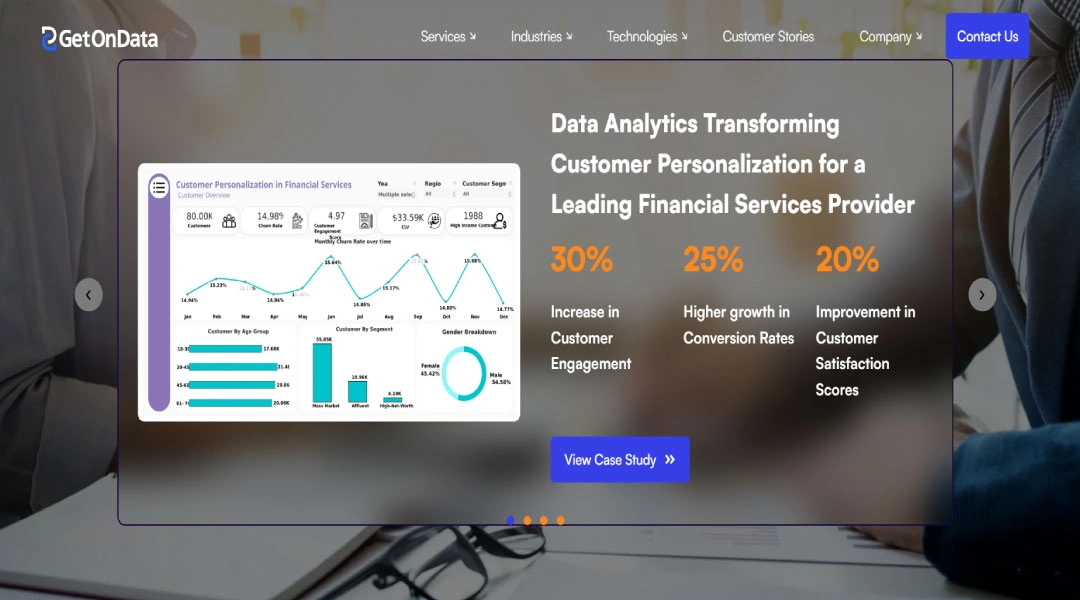
GetOnData is a consulting & data integration company that assists companies in creating dependable data foundations for machine learning, analytics, and AI. Connecting data from various business systems, applications, databases, and cloud environments into a more cohesive data ecosystem is the main goal of its data integration services. For businesses looking to get their current data infrastructure ready for AI adoption, the company can help with data modernization, data migration, data governance, data architecture, AI, and advanced analytics.
GetOnData can assist businesses in creating data pipelines that improve accessibility, consistency, and usability when dealing with fragmented or inconsistent data. By combining data engineering, analytics, and AI capabilities, its method enables organizations to do more than just move data between systems. The objective is to produce data that is governed, structured, and useful for business decision-making, machine learning models, reporting, and AI applications. GetOnData is a suitable choice for businesses seeking a data integration partner that can support both short-term integration needs and long-term AI-ready data strategies.
| Sr. No. | Key Points | Services Provided |
|---|---|---|
| 1 | Founded Year: 2019 | Data Integration |
| 2 | Employees: 11-50 | Healthcare Data Analytics |
| 3 | Location: USA | AI & ML |
| 4 | LinkedIn: View Profile | Azure Data Factory |
| 5 | Website: GetOnData | Power BI |
2. Qlik
For businesses with complicated data environments, Qlik is a reputable provider of data integration, transformation, quality, and analytics services. Its Qlik Talend Data Integration platform is made to integrate data from various sources and send constantly updated data to data lakes, cloud data warehouses, and other locations. The platform helps businesses keep up-to-date data throughout their environments by supporting both batch processing and real-time Change Data Capture (CDC).
Additionally, Qlik offers the ability to support AI and machine learning projects and convert unprocessed data into carefully selected, reliable datasets. Additionally, Qlik has developed knowledge marts and AI-assisted SQL transformations to prepare both structured and unstructured data for generative AI use cases. Qlik can be an attractive option for businesses seeking a well-established platform that integrates, transforms, governs, analytics, and AI readiness.
| Sr. No. | Key Points | Services Provided |
|---|---|---|
| 1 | Founded Year: 1993 | Data Integration |
| 2 | Employees: 1,001 – 5,000 | Business Intelligence |
| 3 | Location: USA | Data Visualization |
| 4 | LinkedIn: View Profile | Digital Transformation |
3. K2view
In order to give businesses reliable, up-to-date business data, K2view specializes in data integration and data product technology. Its platform can organize data around business entities like customers, products, employees, or accounts while integrating data from cloud environments, apps, and legacy systems. Organizations that require consistent and contextual data for operational applications, analytics, and AI may find this entity-centric approach especially helpful.
Additionally, this big data integration company has created features especially for generative AI and AI data readiness. By connecting enterprise data with GenAI applications, its AI Data Fusion solution enables AI systems to access up-to-date and relevant business data. To enable more reliable AI experiences, it integrates features like entity-level access controls, live data synchronization, data quality, and evaluation capabilities.
When real-time access, data context, governance, and personalization are crucial, K2view may be useful for companies using disjointed enterprise systems. It is especially appropriate for businesses developing data-driven AI applications because of its combination of data integration and AI-focused capabilities.
| Sr. No. | Key Points | Services Provided |
|---|---|---|
| 1 | Founded Year: 2009 | Data Integration |
| 2 | Employees: 51 – 200 | Data Migration |
| 3 | Location: USA | Enterprise AI |
| 4 | LinkedIn: View Profile | Cloud Migration |
4. Actian
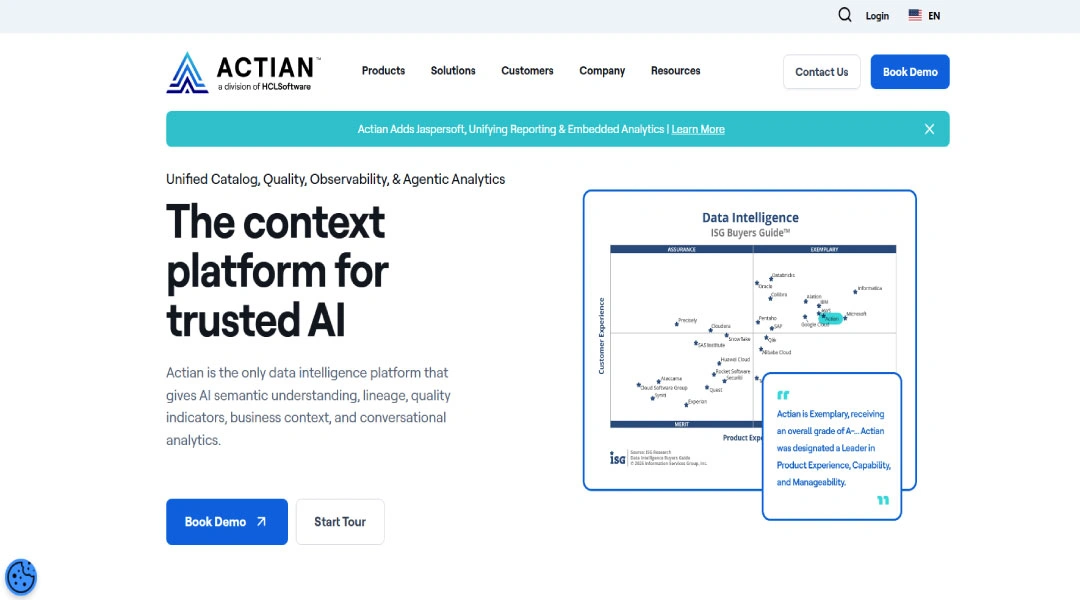
Actian helps businesses make their enterprise information more trustworthy and accessible by offering data integration, data management, data intelligence, and governance capabilities. Data retrieval, data quality, observability, governance, and knowledge graphs are among the topics covered by its current Data Intelligence Platform. Ensuring that AI systems receive organized data instead of poorly governed information is a significant challenge in the adoption of AI that these capabilities address.
Actian also facilitates AI-focused data workflows with technologies like its MCP Server integration, which can give AI tools and agentic workflows verified metadata. Its platform has features for data lineage, PII detection, real-time validation, and controlled access to corporate data.
Actian can be taken into consideration by companies that are preparing data for automation, analytics, and AI agents when data reliability and governance are top concerns. By assisting companies in comprehending, validating, governing, and activating data throughout the enterprise, it goes beyond simple data movement.
| Sr. No. | Key Points | Services Provided |
|---|---|---|
| 1 | Founded Year: 1980 | Data Integration |
| 2 | Employees: 501 – 1000 | Data Intelligence |
| 3 | Location: USA | Data Governance |
| 4 | LinkedIn: View Profile | Data Engineering |
5. Adastra
Adastra is a global data and AI consulting firm that assists businesses in updating their data environments and preparing data for AI and advanced analytics. Common enterprise issues like fragmented data sources, inconsistent information, unclear ownership, legacy architectures, and governance gaps are the main focus of its AI-Ready Data offering. In its transformation programs, the company integrates data architecture, integration, governance, analytics, and AI expertise.
Prior to defining a target architecture and implementation roadmap, Adastra’s approach usually begins with an understanding of business objectives and the current data infrastructure. Unified data models, production-grade data pipelines, operational data quality, governance frameworks, and self-service analytics layers are some of the services it offers.
Additionally, rather than restricting clients to a single technology stack, the company operates across multiple cloud and technology environments. Adastra can be a good choice for businesses looking to build a governed and scalable data foundation that can support analytics, machine learning, and AI initiatives in addition to technical implementation.
| Sr. No. | Key Points | Services Provided |
|---|---|---|
| 1 | Founded Year: 2017 | Data Integration |
| 2 | Employees: 1,001 – 5,000 | Data Warehousing |
| 3 | Location: USA | Data Management |
| 4 | LinkedIn: View Profile | Digital Transformation |
6. Databricks
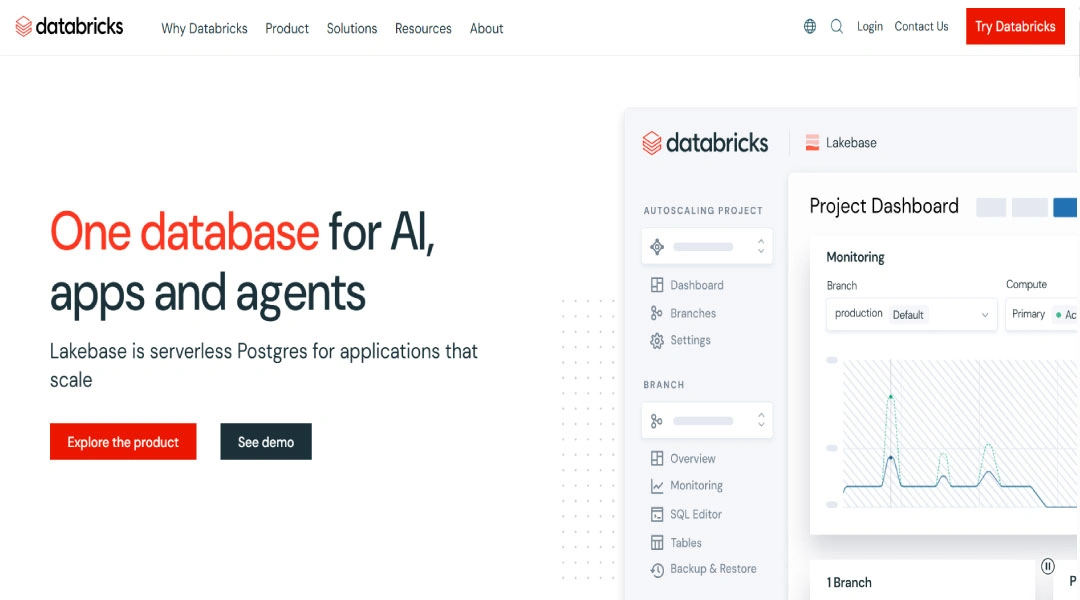
Databricks is a key factor for companies developing advanced data architectures since it offers a single platform for data engineering, analytics, machine learning, and artificial intelligence. Its Data Intelligence Platform integrates with cloud storage and security infrastructure to support data and AI workloads. Databricks employs AI to comprehend the semantics of organizational data and offer features for data discovery, development, optimization, and natural language interaction.
From the perspective of data integration, Databricks can act as a hub for integrating workloads related to data engineering and artificial intelligence. Organizations can handle massive amounts of data while supporting structured and varied data use cases thanks to its lakehouse approach. Data engineering, analytics, and AI teams may become less fragmented as a result.
Organizations that want to create an integrated data and AI platform instead of running distinct environments for data processing, analytics, and machine learning will find Databricks especially useful. It is appropriate for businesses pursuing extensive AI and data modernization projects due to its integration of data engineering, governance, analytics, and AI capabilities.
| Sr. No. | Key Points | Services Provided |
|---|---|---|
| 1 | Founded Year: 2013 | Data Integration |
| 2 | Employees: 5,001 – 10,00 | Cloud Computing |
| 3 | Location: USA | Big Data |
| 4 | LinkedIn: View Profile | Data Science |
7. GoodData.AI
GoodData.AI focuses on integrating analytics, semantic modeling, data integration, and artificial intelligence to assist businesses in transforming enterprise data into useful insights and data products. Snowflake, Amazon Redshift, Google BigQuery, Microsoft SQL environments, Databricks, and other technologies are just a few of the data warehouses and sources that the platform can interface with.
GoodData’s semantic layer, which aids in maintaining uniform definitions and business logic across analytics applications, is one of its main advantages. Because inconsistent metrics and definitions can produce untrustworthy results, this is becoming more and more crucial for AI. Natural language communication, AI-powered analysis, APIs, and embedded AI features that can be integrated into workflows and applications are all supported by GoodData.AI.
Additionally, GoodData facilitates automated data ingestion, transformation, and integration for use cases involving data products, analytics, artificial intelligence, and machine learning. GoodData is for companies that want to integrate data with governed analytics and AI experiences.
| Sr. No. | Key Points | Services Provided |
|---|---|---|
| 1 | Founded Year: 2007 | Data Integration |
| 2 | Employees: 201 – 500 | Data Monetization |
| 3 | Location: USA | AI Migration |
| 4 | LinkedIn: View Profile | Data Visualization |
Key Data Integration Services to Look For
✧ Cloud Data Integration
Enterprise platforms, databases, SaaS apps, and various cloud environments are all connected by cloud data integration. In order to maintain consistent data movement and accessibility, a reputable provider should facilitate integration across public, private, and hybrid cloud infrastructures. Additionally, it needs to assist companies in integrating SaaS apps like CRM, ERP, marketing, finance, and customer support platforms without establishing separate data silos.
By transferring and synchronizing data between modern cloud platforms and legacy systems, cloud integration services can assist migration projects. Seek out experts who provide monitoring, automated workflows, secure connections, and adaptable architectures that can grow to meet evolving business needs.
✧ ETL and ELT Development
Businesses can gather data from various enterprise systems and get it ready for analytics, reporting, and AI applications with the help of ETL and ELT development. Data extraction from databases, CRM systems, ERP platforms, applications, and other sources should be possible with a trustworthy integration partner. Data transformation procedures standardize formats and eliminate gaps.
ELT techniques transform data after it reaches modern platforms, whereas ETL pipelines transform data prior to loading. Because scheduled or event-based pipelines can minimize manual data handling, automation is another crucial factor. As data sources and business needs change, businesses should seek top Salesforce data integration companies that can create scalable pipelines and implement error handling and monitoring.
✧ Real-Time Data Integration
Organizations can transfer and synchronize data between source systems through real-time data integration. Businesses can use streaming pipelines and event-driven architectures to handle changes as they happen rather than depending only on scheduled batch processes.
Applications like fraud detection, personalized customer experiences, operational monitoring, inventory management, and AI-powered decision-making may benefit from this. Technologies that facilitate low-latency synchronization, event processing, and continuous data streaming should be supported by providers. Monitoring, failure management, scalability, and security controls should all be included in an effective real-time integration.
✧ API and Application Integration
Enterprise applications are connected by API and application integration, which allows systems to communicate with one another via structured interfaces. Without the need for manual data transfers, this service can assist businesses in integrating CRM, ERP, HR, finance, marketing, customer service, and SaaS platforms. Automated workflows, which enable an action in one application to initiate processes in another, can also be supported by API-based data exchange.
A skilled integration provider should be knowledgeable about middleware, authentication, REST APIs, and other integration techniques. It should also take version control, error handling, monitoring, and API security into account. Data silos are reduced by effective application integration, which also helps companies in building interconnected technology ecosystems that facilitate automation and scalable digital operations.
✧ Data Quality and Governance
To maintain integrated information’s accuracy, consistency, security, and usability, data quality and governance are crucial. Instead of treating quality as a distinct activity, providers of data integration engineering services should integrate data cleansing, validation, standardization, and monitoring into integration workflows.
Organizations can better understand what data represents, where it comes from, and how it is being used with the help of metadata management. Controlling who can view sensitive data is just as important as access governance. Therefore, companies should assess providers according to how well they integrate security controls and governance frameworks.
✧ Data Warehouse and Lakehouse Integration
Information from several operational systems is brought into modern platforms intended for analytics, reporting, machine learning, and AI through data warehouse and lakehouse integration. A reputable provider should be able to incorporate a variety of structured data sources while preserving consistency all the way through the pipeline.
Companies updating their legacy warehouses may require assistance with pipeline development, cloud adoption, architecture redesign, and data migration. While lakehouse architectures can combine the flexibility of data lakes with features typically associated with warehouses, cloud data warehouses can offer scalable environments for analytical workloads. Organizations can use this foundation to increase enterprise data accessibility for AI and analytics projects.
How Data Integration Creates a Foundation for Enterprise AI
⇒ Breaks Down Data Silos
ERP, CRM, SaaS, cloud, and legacy systems are all connected by data integration. It provides AI applications with unified access to more enterprise data, relationships, and business context for improved insights.
⇒ Improves AI Data Quality
By eliminating duplicates, standardizing formats, and verifying data prior to AI consumption, integration produces cleaner, more consistent datasets that improve the accuracy and reliability of AI outputs.
⇒ Enables Real-Time AI
By continuously streaming operational data, real-time integration allows AI systems to access up-to-date information, make predictions more quickly, identify changes fast, and support event-driven, responsive business applications.
⇒ Supports Generative AI and RAG
Connecting enterprise knowledge sources, preparing structured and unstructured data, improving retrieval quality, and giving generative AI systems relevant context for more precise responses are all made possible by data integration.
⇒ Enables AI Agents
AI agents can retrieve information, initiate workflows, update systems, and automate actions across connected environments thanks to integration, which provides them access to reliable enterprise data and business applications.
Challenges Businesses Face Without a Strong Data Integration Strategy
➢ Fragmented enterprise data
Teams and AI systems find it challenging to obtain comprehensive enterprise information because data remains distributed across various departments, platforms, and applications.
➢ Duplicate and inconsistent records
Duplicate records from various systems may cause confusion, reduce confidence in corporate data, and have an impact on reporting and AI accuracy.
➢ Legacy system complexity
When businesses adopt modern platforms, integration becomes more challenging, expensive, and time-consuming because older applications may use outdated technologies and incompatible formats.
➢ Slow data availability
Teams and AI applications may not be able to use up-to-date information to make timely decisions due to fragmented systems that restrict data access.
➢ Poor data quality
Analytics, machine learning models, AI applications, and critical business decisions can all be compromised by incomplete, out-of-date, inconsistent data.
➢ Integration maintenance costs
Inadequately designed integrations frequently necessitate ongoing troubleshooting, manual updates, and maintenance, which raises operating expenses and reduces important technical resources.
➢ Security and compliance risks
Sensitive enterprise information is more vulnerable in disconnected integration environments due to uncontrolled data movement, inconsistent access permissions, and compliance gaps.
➢ Limited AI scalability
Organizations may find it difficult to extend AI initiatives across departments, systems, workloads, and increasingly complex enterprise environments without integrated and governed data foundations.
➢ Unreliable analytics
Analytics are less reliable for operational and strategic decision-making when inconsistent data from different sources results in inconsistent metrics and incomplete reports.
➢ Lack of real-time insights
Organizations may rely on outdated information in the absence of real-time integration, which would limit their capacity to react swiftly to shifting customer behavior and operational circumstances.
How to Choose the Right Data Integration Company in the USA
➥ Evaluate Data Integration Experience
Examine the company’s experience managing intricate, distributed data environments and enterprise integration projects. Seek knowledge of big data integration services for a variety of workloads, systems, and sources.
➥ Check Technology Expertise
To support modern and standard integration architectures, pick a data integration consulting company with experience with key technologies like AWS, Microsoft Azure, Google Cloud, Snowflake, Databricks, Salesforce, SAP, and Microsoft Fabric.
➥ Assess AI and Analytics Capabilities
To support changing enterprise AI requirements, assess proficiency in AI-ready architectures, ML integration, Gen AI data preparation, RAG pipelines, vector data integration, and real-time analytics.
➥ Review Scalability
Make sure the data integration company has enterprise-grade infrastructure that supports future growth without sacrificing performance, scalable architectures, multi-cloud environments, and real-time processing capabilities to handle growing data volumes.
➥ Examine Security and Governance
Evaluate governance frameworks, privacy management, compliance capabilities, and data access controls. Robust security protocols help in safeguarding confidential data while upholding accountability throughout integrated enterprise data environments.
➥ Consider Ongoing Support
To keep integration environments reliable as business needs change, select top data integration companies that offer continuous pipeline monitoring, performance optimization, data quality monitoring, integration maintenance, troubleshooting, and architecture modernization.
Also Read: A Step-by-Step Guide to Implementing Data Engineering Automation
Data Integration Trends Shaping AI-Ready Enterprises
⊛ AI-Powered Data Integration
AI-powered integration helps companies create data pipelines that are quicker, more accurate, and more flexible by automating data mapping, suggesting intelligent transformations, identifying quality problems, and lowering manual labor.
⊛ Data Lakehouse Adoption
Data lakehouses make it simpler for businesses to manage a variety of datasets and support analytics and ML/AI by offering unified analytics environments that can handle both structured and unstructured data.
⊛ Real-Time Data Pipelines
Streaming analytics and continuous data synchronization are made possible by real-time pipelines, which enable AI systems to access up-to-date information, react quickly to changing circumstances, and facilitate quick, data-driven decision-making.
⊛ Data Fabric and Data Mesh
By facilitating decentralized ownership, interconnected data ecosystems, shared governance, and simpler enterprise-wide access to reliable information, data fabric and data mesh approaches optimize accessibility across distributed environments.
⊛ Data Integration for Agentic AI
AI agents can retrieve information, manage workflows, and carry out business operations through data integration. It connects them to enterprise systems and permits context-aware interactions and secure access to operational data.
Ready to Build an AI-Ready Data Foundation for Your Business?
Data integration is becoming a crucial foundation for enterprise AI; however, the ideal partner should go beyond connecting systems. Organizations must prioritize data quality, scalability, governance, and real-time accessibility when determining enterprise data integration services.
Compare providers mentioned above based on technical expertise, enterprise project experience, long-term support capabilities, and AI readiness. Selection of the ideal data integration company helps to develop a stronger foundation for analytics, automation, AI agents, and Gen AI while allowing trusted data to move efficiently across organizations.

