
In this era, data matters a lot for decision-making across industries; healthcare has become the most promising field. As medical organizations are rapidly establishing themselves, the amount of data is also increasing. Healthcare data analytics change the way professionals collect and interpret data. The worldwide medical analytics market is expected to reach $133.2 billion by 2029.
Every patient interaction, clinical trial, and prescription contributes to a range of information. What matters is your potential to turn them into a valuable metric. These data prioritize transforming raw, complicated datasets into supportive, better metrics. These metrics enhance patient expectations and smooth operations. Since healthcare firms are continuously digitizing themselves, custom data analytics solutions have become the core capability.
This blog represents the healthcare data analytics basic & advanced trends along with the challenges and benefits. Read to know the use cases for data analytics in the medical industry.
What Is Healthcare Data Analytics?
Healthcare data analytics is the methodology of collecting, representing, and analyzing medical data to reveal patterns and analyze decision-making. The data comes from various sources that involve EHR, clinical trial datasets, and patient-generated data. Consult with big data analytics service providers to measure clinical trials.
Analyzing prescription and adherence data helps you to understand how patients use therapy across controlled trial environments. The firms use advanced techniques such as ML and data visualization to strengthen insights. These approaches are used to assume patient experience, track operational mistakes, and gain early insights. Here are 4 types of healthcare data analytics used for different purposes.
• Descriptive analytics – Descriptive analytics covers the examination of patient medical records and the delivery of treatment histories.
• Diagnostic analytics – Diagnostic analytics help to measure data to understand why certain events occur. In healthcare systems, this method is used to evaluate why specific patients experienced complications after surgery.
• Predictive analytics – This analytics is used to predict future results by analyzing past data; the healthcare sector can predict patient requirements and complications.
• Prescriptive Analytics – This analytic suggests specific actions depend on metrics powered by data. In a medical care setting, prescriptive analytics are used to recommend treatment for a patient. It supports the medical team to make valuable decisions about patient care.
Why Healthcare Organizations Are Investing in Analytics
In order to meet the growing demands for patient-centered, high-quality treatment while enhancing operational efficiency, healthcare organizations are investing more and more in data analytics. Providers are utilizing analytics to obtain deeper insights into individual health problems, treatment responses, and care preferences as patients want more individualized healthcare experiences. The data analytics service providers make it possible to create individualized treatment programs that enhance patient results, satisfaction, and engagement.
Additionally, analytics is essential for improving clinical and operational performance. Large amounts of data can be analyzed by healthcare providers to find inefficiencies, allocate resources optimally, cut expenses, and improve procedures.
Forecasting patient admissions, managing personnel requirements, and averting possible health issues through early intervention are all made possible by predictive analytics. It is assisting businesses in providing better care, increasing productivity, and maintaining their competitiveness in a setting that is becoming more and more data-driven.
Predictive Analytics for Early Disease Detection
Preventive actions, better results, and more proactive healthcare management are made possible by predictive analytics’ early detection of possible health hazards.
➔ Chronic Disease Risk Prediction
Predictive analytics forecasts the likelihood of chronic illnesses using clinical records, lifestyle data, genetic factors, and patient histories. Healthcare professionals can identify high-risk individuals with the aid of sophisticated algorithms, allowing for tailored care plans and focused treatments. Quick treatment, quality outcomes, and effective resource allocation are all supported by patient risk classification.
➔ Early Cancer Detection and Screening
Data analytics services and solutions can identify small trends in patient data that can point to cancer in its early stages. Predictive models enhance screening accuracy and facilitate early diagnosis by examining medical histories, imaging results, lab reports, and genetic data. Early detection improves patient survival rates, lowers healthcare costs, and boosts treatment efficacy through prompt clinical intervention.
Personalized Treatment and Precision Medicine
By utilizing patient data, increasing therapy efficacy, lowering unfavorable outcomes, and improving care quality, healthcare analytics makes personalized treatments possible.
⇒ Genomic Data Analysis
This is another use case of data analytics where healthcare professionals can better understand how genetic variants affect disease risk and treatment response by using genomic data analysis. Clinicians can minimize side effects when recommending drugs by looking at a patient’s genetic profile. Additionally, early detection of inherited disorders is facilitated by genetic risk assessments, allowing for proactive care planning and focused preventative measures that enhance long-term health outcomes.
⇒ Treatment Outcome Optimization
By offering data-driven insights that direct clinical decision-making, healthcare analytics helps optimize treatment outcomes. Providers can determine the best treatments for particular patient groups by examining patient histories, treatment responses, and clinical outcomes. This strategy improves overall patient outcomes, minimizes needless treatments, shortens recovery times, and lessens reliance on trial-and-error therapy methods.
Remote Patient Monitoring and Telehealth Analytics
In order to assess health in real time, increase access to care, facilitate proactive interventions, and improve patient outcomes outside of traditional healthcare settings, telehealth analytics and remote patient monitoring use data analytics services and solutions.
➥ Wearable Device Data Analysis
Heart rate, blood pressure, activity levels, and sleep patterns are just a few of the health data streams that wearable technology continuously produces. Healthcare professionals can use analytics to track these vital indicators in real time, spot unusual patterns, and identify any health problems before they worsen. Wearable data-enabled early intervention options can enhance patient outcomes, lower hospital admissions, and promote more proactive and individualized healthcare management.
➥ Telehealth Performance Insights
Telehealth analytics offers important information about treatment adherence, appointment attendance, patient involvement, and the general efficacy of virtual care. Healthcare organizations can optimize digital healthcare services and pinpoint areas for improvement by examining these indicators. The quality of virtual consultations, provider-patient communication, and patient satisfaction are all improved by performance insights. Analytics is essential to provide effective, accessible, and patient-centered care as telehealth use rises.
Reducing Hospital Readmissions with Data Analytics
By identifying high-risk patients, facilitating focused interventions, and enhancing post-discharge care planning, healthcare data analytics helps lower hospital readmission rates. Providers can give proactive support, improve recovery outcomes, reduce healthcare costs, and increase overall patient satisfaction by analyzing clinical and behavioral data.
➨ Readmission Risk Prediction Models
Readmission risk prediction models identify patients who are more likely to return to the hospital based on clinical signs, medical histories, treatment records, and patient behavior patterns. Healthcare professionals can identify possible issues early and put preventive intervention plans into action with the use of advanced analytics. These could include constant monitoring, medication management, and customized care plans. Organizations can enhance patient outcomes, lower preventable readmission rates, and maximize the use of healthcare resources by proactively addressing risk factors.
➨ Care Coordination Improvements
By guaranteeing that patients receive the proper follow-up treatment upon discharge, data analytics improves care coordination. Healthcare professionals may monitor treatment compliance, schedule appointments as efficiently as possible, and identify patients who need extra help.
Through timely reminders, educational materials, and tailored outreach, analytics also enhances communication between patients and care teams. Improved coordination greatly lowers the risk of hospital readmissions, improves patient participation, facilitates more seamless recovery processes, and helps avoid gaps in treatment.
Also Read: Data Analytics Maturity Models: A Step-by-Step Business Guide
Enhancing Clinical Decision-Making
Clinicians may make quicker, better decisions with the help of actionable information from healthcare data analytics. Healthcare professionals can enhance overall healthcare efficiency and outcomes while improving diagnostic accuracy, optimizing treatment plans, lowering errors, and providing higher-quality patient care by analyzing patient data, medical histories, and clinical outcomes.
➞ Clinical Decision Support Systems (CDSS)
It helps medical professionals make decisions by utilizing artificial intelligence, data analytics, and evidence-based recommendations. These systems provide recommendations for diagnosis, therapy, medication management, and preventive care after analyzing patient data in real time. CDSS helps physicians make better judgments, increase patient safety, lower medical errors, and improve the consistency and quality of healthcare services by providing pertinent insights at the moment of care.
➞ Diagnostic Accuracy Improvement
By finding patterns, trends, and correlations in vast amounts of patient data, data analytics increases the accuracy of diagnoses. Advanced analytical technologies can enhance differential diagnosis procedures, identify possible risk factors, and aid in the early detection of diseases. Healthcare expertise can provide a transparent view of a patient’s health report by integrating laboratory data, imaging results, clinical records, and predictive models. Faster diagnosis, fewer misdiagnoses, better treatment results, and increased confidence in professional judgment are the results of this.
Population Health Management and Public Health Analytics
By identifying patterns, hazards, and care gaps, population health management uses analytics to enhance outcomes across large patient populations. Healthcare organizations may analyze large datasets to inform public health plans, maximize resource use, and create focused interventions. It improves community well-being and lessens healthcare disparities with the help of big data analytics service providers.
➣ Disease Outbreak Prediction
By continuously tracking epidemiological data, medical records, environmental factors, and demographic changes, data analytics plays a critical role in forecasting disease outbreaks. Unusual patterns that can indicate new health risks can be found using sophisticated prediction algorithms. Healthcare authorities can respond proactively, distribute resources efficiently, and lessen the effects of infectious diseases thanks to early warning systems. This proactive strategy enhances community safety and public health readiness.
➣ Community Health Improvement Programs
By offering insights into population requirements, risk factors, and healthcare utilization trends, healthcare analytics helps community health improvement initiatives. These insights guarantee that services are focused where they are most required by assisting organizations in making well-informed judgments on resource allocation planning. By identifying at-risk groups and encouraging early interventions, analytics also helps preventative care initiatives. Consequently, healthcare providers can lower avoidable illnesses, enhance health outcomes, and develop more efficient, data-driven public health initiatives.
Operational Efficiency Through Healthcare Analytics
Organizations may improve service delivery, cut expenses, and streamline operations with the use of healthcare analytics. Healthcare providers can maintain operational sustainability in an increasingly complex healthcare environment while optimizing workforce levels, managing resources more efficiently, improving workflow efficiency, and ensuring high-quality patient care by turning data into actionable insights.
◈ Workforce and Staffing Optimization
By examining patient volumes, admission trends, staff availability, and workload patterns, healthcare analytics help organizations optimize workforce planning. By scheduling the appropriate number of workers at the appropriate times, predictive insights assist healthcare institutions in minimizing understaffing and overstaffing problems. Optimizing staffing increases worker productivity, reduces burnout, improves the quality of patient care, and guarantees that healthcare organizations can meet changing demand while keeping labor-related expenses under control.
◈ Hospital Resource Management
By offering insight into the use of beds, medical equipment, supplies, and facilities, data analytics facilitates effective hospital resource management. Healthcare providers are able to predict future demand, spot inefficiencies, and track resource consumption in real time. These insights guarantee that vital resources are available when needed, prevent waste, and enhance inventory management. In addition to improving operational performance and reducing expenses, effective resource management also improves patient outcomes and experiences.
Improving Patient Experience and Engagement
To gain a deeper understanding of patient behavior, preferences, and expectations, healthcare organizations are utilizing data analytics services and solutions. Providers can improve patient satisfaction, engagement, retention, and provide more individualized healthcare experiences that promote better results and long-term patient relationships by turning patient data into actionable insights.
✧ Patient Feedback Analytics
Through the analysis of surveys, reviews, patient comments, and service ratings, patient feedback analytics assists healthcare organizations in determining satisfaction levels. These observations show patterns in patient experiences and point out areas that need to be improved. Healthcare professionals may make well-informed decisions that boost patient trust, improve care quality, and provide a more positive healthcare experience at every stage of the patient journey by recognizing common issues, service gaps, and opportunities for improvement.
✧ Personalized Patient Communication
Healthcare providers can provide individualized communication based on each patient’s requirements and preferences thanks to data analytics. Patients are better able to adhere to their treatment programs when they receive automated reminders for appointments, prescription drugs, follow-up appointments, and preventive screenings. By offering timely and pertinent information, personalized alerts, and instructional materials, treatment compliance is enhanced. Patients become more involved in their care as a result, which improves health outcomes, boosts patient satisfaction, and strengthens the bond between the patient and the clinician.
Challenges of Implementing Data Analytics in Healthcare
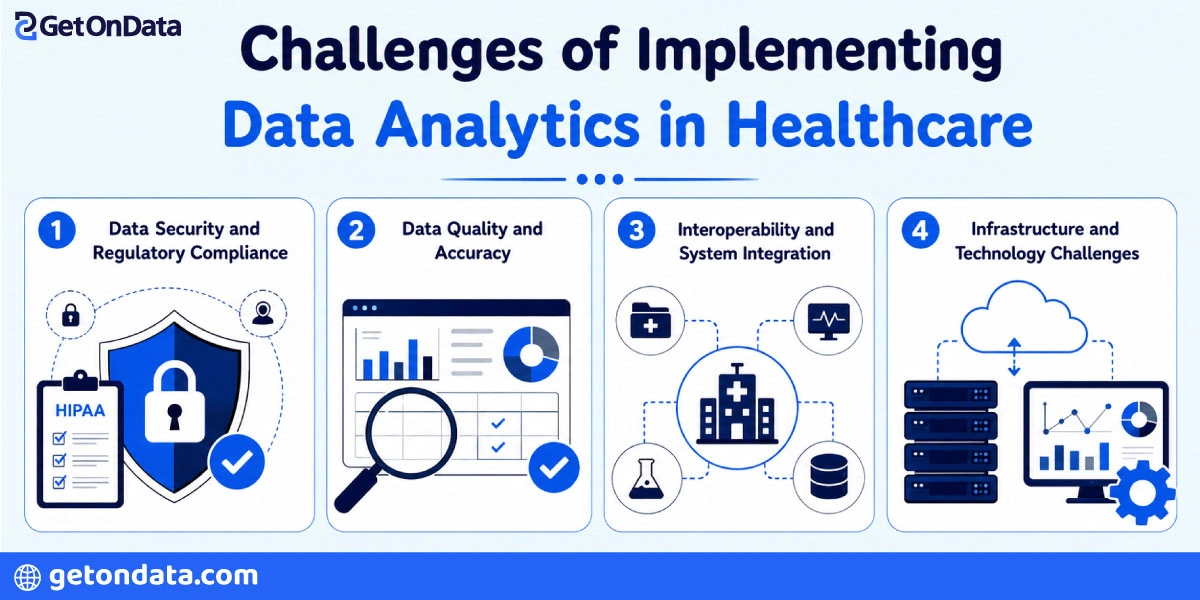
Healthcare data analytics presents significant benefits, but firms also face challenges related to data security, system integration, regulatory compliance, and data management. Successfully overcoming these obstacles demands strong governance frameworks, secure technologies, and effective plans for connecting fragmented healthcare systems while managing data accuracy and reliability.
✦ Data Security and Regulatory Compliance
Healthcare firms manage a large amount of sensitive patient data, so they make data security a top priority. Robust cybersecurity measures involve access controls, encryption, and frequent monitoring, which are necessary for safeguarding data from breaches. In addition, firms must comply with healthcare regulations that govern data collection, sharing, storage, and usage. Managing compliance requires regular audits, policy updates, and staff training. A strong security and compliance framework supports building patient trust while limiting legal & financial mistakes.
✦ Data Quality and Interoperability Issues
The quality of healthcare analytics relies on the performance & consistency of available data. Inaccurate, incomplete, and duplicate records can lead to slow decision-making. Healthcare providers struggle with fragmented data spread across various systems and departments. Interoperability challenges limit the seamless exchange of data between platforms. Establishing standardized data formats, enhanced data governance, and adopting integration techniques support firms in connecting fragmented systems and ensuring accurate healthcare analytics outcomes.
Future Trends in Healthcare Data Analytics
The future of medical care analytics is powered by AI, ML, real-time intelligence, and automation. Advanced data analytics services and solutions are allowing predictive care and customized plans. Following these advanced trends helps to make faster clinical decisions and connected healthcare systems that enhance efficiency.
❖ AI-Powered Predictive Healthcare
AI is transforming medical care by allowing advanced predictive models that track potential health errors before they become critical. AI supports early diagnosis and proactive interventions by measuring patient histories, clinical records, and lifestyle factors. An advanced clinical support system assists healthcare experts by offering evidence-based suggestions, limiting diagnostic mistakes, and enhancing treatment plans. As AI technologies are frequently evolving, healthcare firms can deliver more customized care while optimizing operational and clinical processes.
❖ Real-Time Healthcare Analytics
Real-time healthcare analytics enable providers to access and measure patient data accurately, allowing faster & valuable decision-making. A frequent monitoring system, connected medical devices, and an integrated EHR support clinicians in responding quickly to changing patient conditions. These capabilities support enhanced care coordination, reduce hospital readmission, and drive patient safety. The connected healthcare ecosystem expands, limits hospital readmission, and drives patient safety. As the connected healthcare ecosystem expands, firms can leverage real-time metrics to streamline operations and enhance resource allocation. With AI, medical firms can deliver responsive and patient-centric healthcare services.
Also Read: Top 10 Data Analytics Companies in India (2026 Edition)
How Businesses Can Leverage Healthcare Data Analytics Solutions
Healthcare firms can drive analytical metrics by aligning technology with strategic goals, investing in the right expertise, ensuring data quality & implementing scalable solutions. These solutions support improved decision-making and patient results.
⦿ Building a Data-Driven Healthcare Strategy
Successful healthcare analytical practice begins with clearly defining the organization & patient goals. Firms must identify KPIs, prioritize measurable outcomes, and establish reliable data governance practices. Choosing an appropriate tool is equally necessary, as the ideal platforms allow real-time metrics, predictive capabilities, and seamless integration with current systems. The structured plan assists healthcare providers in enhancing operational efficiency, driving patient experience, and making valuable clinical decisions.
⦿ Partnering with Healthcare Analytics Experts
Collaborating with medical care analytics expertise drives implementation & limits the risks related to complex data projects. Expert partners bring industry expertise, technical specialization, and regulatory knowledge to ensure successful release. They support firms in designing scalable solutions, integrating fragmented data sources, and managing compliance with healthcare regulations. Skilled guidance supports ongoing optimization, allows healthcare providers to adapt evolving requirements, drives performance, and long-term values.
Ready to Unlock Better Patient Outcomes with Healthcare Data Analytics?
As healthcare data analytics are gaining popularity, the number of metrics is getting bigger and bigger. From clinical metrics to market data, teams perform various complicated data structures. So, these metrics need to be shared among a vast number of stakeholders. Regulatory bodies, clinical teams, and external partners require the same data to be presented in various ways. These scenarios require a growing need for structured and consistent communication. So, these are the most popular data analytics use cases.
Collaborating with data analytics service providers is a worthwhile investment when you own a healthcare business. Here, we have mentioned the data analytics use cases delivering potential for accurate diagnosis and personalized treatments. By navigating existing complexities and embracing upcoming advancements, medical care providers can integrate data to drive operational workflows. The advanced feature of Power BI plays a core role in the revolution, offering resources for data integration, personalized metrics, and instant analytics.

