
The worldwide healthcare industry is undergoing a comprehensive transformation. The industry is driven by rising costs, population, and growing cases of chronic disease. Do you know 68% of leaders in this industry lack a strong strategy for analytics adoption? Healthcare data analytics services have transformed from back-office functions to modern healthcare operations.
In 2026, the popularity of healthcare analytics solutions has increased immensely. Healthcare custom data analytics solutions in the USA convert claims, patient, and operational data into actionable metrics. These companies are responsible for enhancing outcomes, compliance, and efficiency.
The healthcare firms are generating a vast amount of data, making data analytics crucial for converting fragmented data into valuable outcomes. The modern health data analytics has shifted beyond dashboards to predictive metrics. These tools are strengthening clinicians, executives, and administrators to act smartly.
Healthcare analytics is the process in which firms use virtual technologies to exchange & analyze data. Analytics software allows providers to visualize crucial data so that they can make valuable decisions. Finding a data analytics company is necessary for serving actionable metrics to navigate crucial challenges. As per the market reports, it is estimated that the worldwide analytics market will evolve with an annual CAGR of 21.41% by 2034.
The factors behind the growth involve a rapid rate of technological advancements, massive investment in the medical care industry, etc. As analytics will remain at the forefront in the near future, here we have discussed the top 10 data analytics service providers, who play a strong role in the US healthcare industry.
What is Healthcare Data Analytics?
➔ Definition
Healthcare custom data analytics solutions are the systematic method of gathering, integrating, and analyzing clinical, financial, and operational data to generate metrics that enhance patient outcomes. The data analytics solutions are responsible for cost reductions and managing compliance. The potential of healthcare analytics is to connect all the fragmented sources into coherent systems and enhance care patterns. There are several types of healthcare analytics mentioned below-
• Descriptive analytics are used to evaluate the historical healthcare data to understand what happened.
• Predictive analytics are used for AI and statistical models to forecast future health risks or patient outcomes.
• Prescriptive analytics are recommended to enhance care delivery and operational performance.
• Diagnostic analytics are used to track the causes behind operational and medical issues.
Healthcare data analytics are widely used for disease monitoring and prevention, customized planning of treatment, and resource optimization. It is used by data analytics service providers for fraud detection and remote patient monitoring. Healthcare leaders can also use these for improving clinical decisions. In 2026, a wide number of medical organizations are adopting these to enhance patient outcomes and allow value-based healthcare models. The advanced analytic platform supports firms to comply with regulations while enhancing patient satisfaction and efficiency.
➔ Key Use Cases
⦾ Patient care optimization
Healthcare data analytics services and solutions support providers deliver customized & quick treatment by measuring patient records, medical histories, and real-time data. Predictive analytics track high-risk patients early, allow proactive care, and limit readmission rates. It also supports clinical decision-making, plans treatments, and patient engagement. It ultimately supports safety, outcomes, and change in the overall healthcare experience.
⦾ Hospital operations efficiency
Healthcare data analytics services enhance hospital efficiency by optimizing staff scheduling, resource allocation, and workflow processes. Real-time operational insights support limited patient wait time, avoid resource shortage, and drive service delivery. Hospitals can track performance metrics, streamline administrative operations, and lower operational costs while managing the highest standards of patient care.
⦾ Revenue cycle management
Data analytics drive revenue cycle management by allowing for billing accuracy, claim processing, payment monitoring, and financial forecasting. Healthcare firms can track denied claims, limit coding errors, and drive reimbursements through an automated analytics system. It can lead to improved cash flow, minimize administrative burden, and drive financial performance across healthcare operations.
⦾ Population health management
Healthcare analytics support population health management by tracking disease trends, risk factors, and care gaps across vast patient groups. Providers can utilize data-driven metrics to craft preventive care programs, track chronic disease, and enhance community health outcomes. The metrics support limited healthcare costs while supporting value-based care and long-term wellness.
⦾ Fraud detection
Healthcare data analytics company supports monitoring claims, billing irregularities, and mysterious financial activities. The advanced AI and ML models measure vast datasets to monitor unusual patterns and unauthorized transactions. Fraud detection analytics safeguards healthcare firms from financial loss while validating compliance and securing healthcare workflows.
Why Healthcare Data Analytics is Critical in 2026
⇒ Rise of AI and machine learning in healthcare
AI and ML are transforming healthcare. It embraces quick diagnosis, predictive analytics, automated workflows, and recommends smart treatments. The healthcare firms are widely relying on advanced analytics to process complicated medical data and enhance clinical decisions. In 2026, AI-based healthcare analytics will be crucial for driving patient outcomes and accuracy.
⇒ Increasing data from EHRs, wearables, IoT
Healthcare systems generate a vast volume of data through electronic health records, remote monitoring tools, and wearable devices. The analytics platform supports a healthcare data analytics company to organize, measure, and extract valuable insights from data. In 2026, managing and utilizing healthcare data effectively is necessary for serving connected and proactive patient care.
⇒ Shift toward personalized medicine
Customized medicine relies strongly on healthcare analytics to tailor treatments based on patient genetics, lifestyle data, and medical histories. The advanced analytics support suggests effective therapies, measures treatment response, and drives accurate healthcare strategies. In 2026, healthcare firms will strongly use these data-driven solutions to provide effective and patient-centric care experiences.
⇒ Regulatory and compliance pressures
A healthcare data analytics services solutions company must adhere to crucial regulations related to patient privacy and data security, reporting. Analytics solutions support maintaining compliance by enhancing data accuracy, tracking risks, and generating automated reports. In 2026, rising regulatory demands make healthcare data analytics crucial for verifying security, transparency, and adherence to strong healthcare policies.
⇒ Cost reduction and efficiency demands
Rising healthcare costs & operational challenges are increasing the demand for data analytics solutions, which enhance efficiency and limit unnecessary spending. The data analytics company optimizes staffing, resource allocation, supply chain management, and patient workflows. In 2026, firms will be widely depending on analytics to streamline operations while managing quality and cost-effective healthcare services.
Top Healthcare Data Analytics Companies in the USA (2026)
1. GetOnData
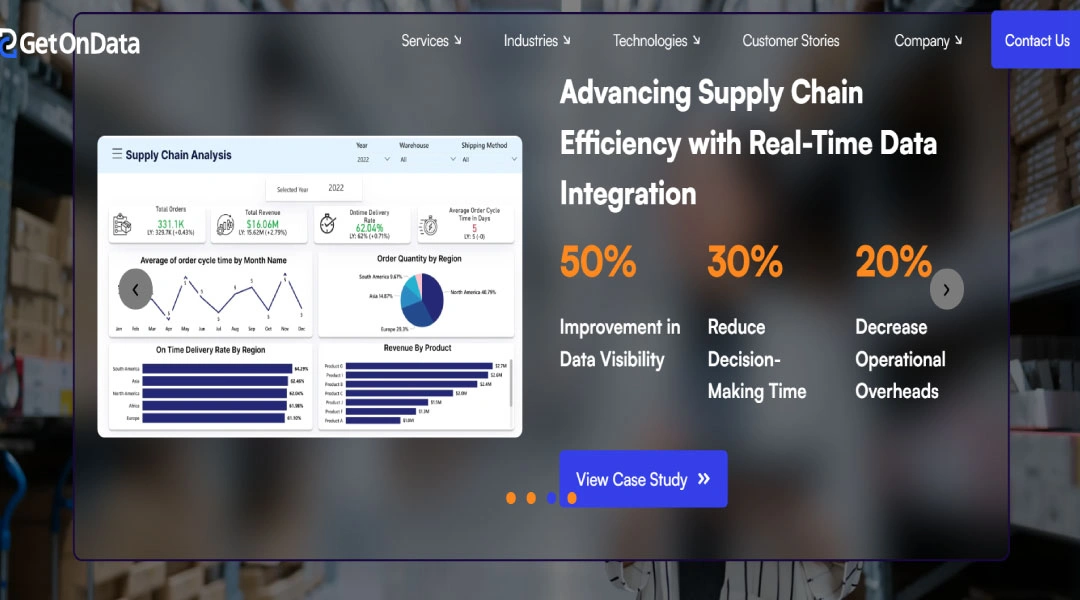
GetOnData provides healthcare data analytics solutions with an emphasis on cloud-based healthcare modernization, AI integration, and predictive analytics. Through scalable analytics solutions, the company assists healthcare providers in managing massive datasets, increasing operational effectiveness, and improving patient outcomes. In the USA healthcare market in 2026, its proficiency in interoperability, reporting automation, and healthcare data engineering enables organizations to support informed decision-making, optimize processes, and fortify digital healthcare transformation initiatives.
| Sr. No. | Key Points | Services Provided |
|---|---|---|
| 1 | Founded Year: 2019 | Healthcare Data Analytics |
| 2 | Employees: 11-50 | Data Engineering |
| 3 | Location: Ahmedabad | AI & ML |
| 4 | LinkedIn: View Profile | Azure Data Factory |
| 5 | Website: GetOnData | Power BI |
2. Definitive Healthcare
In the USA, Definitive Healthcare is a top supplier of market analytics and business intelligence services for the healthcare industry. Its platform provides comprehensive information about patient journeys, healthcare spending, provider networks, and market potential. Its analytics products are used by healthcare organizations to enhance competitive analysis, sales intelligence, and strategic planning. In 2026, the business will still assist healthcare suppliers, pharmaceutical companies, and providers in making more informed, data-driven choices throughout the changing healthcare sector.
| Sr. No. | Key Points | Services Provided |
|---|---|---|
| 1 | Founded Year: 2011 | Healthcare Data Analytics |
| 2 | Employees: 501 – 1000 | Data Integration |
| 3 | Location: USA | Data Management |
| 4 | LinkedIn: View Profile | Advanced Analytics |
3. McKinsey & Company
For healthcare providers, insurers, and pharmaceutical companies, McKinsey & Company offers cutting-edge healthcare analytics and digital transformation consulting services. The company uses AI, machine learning, and healthcare knowledge to enhance patient outcomes, value-based care, and operational effectiveness. Its analytics-driven tactics assist businesses in streamlining processes, cutting expenses, and updating healthcare systems. McKinsey is still a reliable partner for large-scale data transformation projects and healthcare innovation in 2026.
| Sr. No. | Key Points | Services Provided |
|---|---|---|
| 1 | Founded Year: 1926 | Healthcare Data Analytics |
| 2 | Employees: 10,000+ | Advanced Data Analytics |
| 3 | Location: USA | Data Engineering |
| 4 | LinkedIn: View Profile | Big Data Strategy |
4. Trella Health
Trella Health is an expert in post-acute care analytics and healthcare market information. In order to facilitate business expansion and care coordination, the organization offers practical insights into referral trends, patient demographics, and provider performance. Through sophisticated reporting, referral management tools, and AI-powered analytics capabilities for post-acute healthcare providers, Trella Health continues to improve healthcare decision-making in 2026.
| Sr. No. | Key Points | Services Provided |
|---|---|---|
| 1 | Founded Year: 2014 | Healthcare Data Analytics |
| 2 | Employees: 51 – 200 | Data Analytics |
| 3 | Location: USA | Big Data |
| 4 | LinkedIn: View Profile | Healthcare Technology |
5. IQVIA
IQVIA is a global leader in healthcare analytics solutions. The company combines AI, advanced analytics, and large healthcare datasets to improve clinical trials, patient engagement, and healthcare decision-making. Its Connected Intelligence platform supports pharmaceutical innovation and operational efficiency across the healthcare ecosystem. In 2026, IQVIA continues helping healthcare organizations accelerate medical research, optimize treatments, and enhance patient outcomes through data-driven healthcare strategies.
| Sr. No. | Key Points | Services Provided |
|---|---|---|
| 1 | Founded Year: 2014 | Healthcare Data Analytics |
| 2 | Employees: 10,000+ | Clinical Data Analytics Solutions |
| 3 | Location: USA | Advanced Analytics |
| 4 | LinkedIn: View Profile | Market Intelligence Analytics |
Also Read: Data Analytics Consulting Companies in Pune for Scalable BI Solutions
6. Arcadia
Arcadia is a renowned analytics services company for its proficiency in value-based care solutions. The business assists healthcare institutions in combining operational, clinical, and claims data into cohesive analytics systems. Initiatives to increase quality performance, care coordination, and risk stratification are supported by its solutions. As of 2026, Arcadia is still helping health systems and providers in the US successfully shift to value-based healthcare delivery models, improve patient outcomes, and save healthcare costs.
| Sr. No. | Key Points | Services Provided |
|---|---|---|
| 1 | Founded Year: 2014 | Healthcare Data Analytics |
| 2 | Employees: 501 – 1000 | Population Health Analytics |
| 3 | Location: USA | Predictive Analytics |
| 4 | LinkedIn: View Profile | Care Management Analytics |
7. Edenlab
Edenlab helps businesses combine disparate healthcare data into useful insights by offering interoperability and healthcare analytics solutions. With cloud-based healthcare platforms, safe data interchange, and predictive analytics, the company helps providers, insurers, and digital health enterprises. Its knowledge of patient-centered healthcare ecosystems enhances care delivery and operational effectiveness. Through sophisticated interoperability-focused digital transformation solutions and scalable analytics technology, Edenlab continues to propel healthcare innovation in 2026.
| Sr. No. | Key Points | Services Provided |
|---|---|---|
| 1 | Founded Year: 2014 | Healthcare Data Analytics |
| 2 | Employees: 51 – 200 | Fintech |
| 3 | Location: USA | Medtech |
| 4 | LinkedIn: View Profile | Cloud management |
8. Itransition Group
Itransition Group provides cloud migration, AI-powered business intelligence, and healthcare analytics services to healthcare organizations. Through scalable analytics solutions, the company assists providers in managing intricate datasets, automating reporting procedures, and enhancing patient care. Digital healthcare transformation is supported by its proficiency in interoperability, predictive analytics, and specialized healthcare software. Itransition is still providing dependable healthcare technology solutions in 2026 that enhance operational efficiency and enable data-driven healthcare decision-making.
| Sr. No. | Key Points | Services Provided |
|---|---|---|
| 1 | Founded Year: 1998 | Healthcare Data Analytics |
| 2 | Employees: 1,001 – 5000 | Technology Consulting |
| 3 | Location: USA | Enterprise Systems Development |
| 4 | LinkedIn: View Profile | Software Product Development |
9. Health Catalyst
One of the most well-known healthcare analytics firms in the United States is Health Catalyst. Clinical, operational, and financial data are integrated into meaningful insights by its Ignite platform, which promotes operational effectiveness and population health management. The business assists healthcare institutions in lowering healthcare costs, optimizing revenue cycles, and improving patient outcomes. Through AI-powered technologies, interoperability solutions, and strategic advisory services, Health Catalyst is still at the forefront of healthcare analytics innovation in 2026.
| Sr. No. | Key Points | Services Provided |
|---|---|---|
| 1 | Founded Year: 2008 | Healthcare Data Analytics |
| 2 | Employees: 1,001 – 5,000 | Clinical Analytics |
| 3 | Location: USA | AI and Data Science |
| 4 | LinkedIn: View Profile | Healthcare Business Intelligence |
10. Clarify Health Solutions
Clarify Health Solutions is an expert in healthcare performance information and value-based care analytics. Its technology optimizes provider networks, lowers healthcare costs, and improves treatment quality by combining clinical and claims data with AI-powered analytics. The organization provides population health management, reimbursement analysis, and performance benchmarking services to healthcare organizations. Clarify Health is still assisting payers and healthcare providers in 2026 to enhance data-driven decision-making and enhance clinical and operational results.
| Sr. No. | Key Points | Services Provided |
|---|---|---|
| 1 | Founded Year: 2015 | Healthcare Data Analytics |
| 2 | Employees: 201 – 500 | Artificial intelligence |
| 3 | Location: USA | Cloud-based analytics |
| 4 | LinkedIn: View Profile | Enterprise analytics |
Key Trends in Healthcare Data Analytics (2026)
➥ AI-driven diagnostics and decision support
AI is revolutionizing healthcare diagnostics by measuring medical images, patient reports, and clinical data with accuracy & speed. The AI-powered decisions support physicians in identifying diseases earlier, recommending treatments, and limiting diagnostic errors. In 2026, medical firms will widely rely on AI to enhance their clinical outcomes and operational efficiencies.
➥ Real-time analytics and edge computing
These analytics allow providers to track patient conditions smartly and respond faster to crucial situations. Edge computing processes healthcare data closer to medical devices and wearable tools, limits latency, and enhances system performance. In 2026, the trend supports quick clinical decisions, remote patient monitoring, and effective healthcare services.
➥ Interoperability (FHIR, APIs)
The following technologies enable firms to have seamless data exchange between clinics, hospitals, and insurers. The standards drive care coordination, limit data silos, and drive patient experience. In 2026, interoperability remains crucial for creating connected healthcare ecosystems and allows data-driven clinical decision-making across firms.
➥ Cloud-native healthcare platforms
Cloud native platforms in the healthcare industry offer scalable, flexible, and secure environments for storing & measuring healthcare data. The following platforms offer remote access, quick release, and cost-effective infrastructure management. In 2026, healthcare firms will widely adopt these platforms for enhancing collaboration, allowing advanced analytics, and driving virtual transformation while managing security and compliance standards.
➥ Data privacy-enhancing technologies
With the rise in healthcare data, firms are widely obtaining advanced privacy tools to safeguard crucial patient data. Zero-trust security modules, encryption, and secure data-sharing frameworks support minimizing cybersecurity risks. In 2026, healthcare providers prioritize privacy-based analytics solutions to comply with regulations. These technologies strengthen trust and verify safe management of private medical data.
➥ Generative AI in clinical documentation
Gen AI is streamlining clinical documentation by automatically crafting medical notes, summaries, and patient records from physician conversations & healthcare data. It minimizes administrative workload, drives documentation accuracy, and saves time. In 2026, Gen AI plays a strong role in driving healthcare productivity and efficiency.
Also Read: List of Healthcare Data Analytics Services for Clinical & Operational Efficiency
Challenges in Healthcare Data Analytics
◈ Data privacy and security concerns
Healthcare firms manage highly crucial patient data, posing major challenges to data privacy and cybersecurity. It safeguards medical records from breaches and unauthorized accessibility, which requires advanced security frameworks and frequent monitoring. In 2026, healthcare analytics providers must verify compliance with strict regulations while managing secure data management systems.
◈ Integration with legacy systems
Most of the healthcare providers still depend on outdated legacy systems, which are tough to integrate with advanced analytics platforms. The following systems lack compatibility with cloud technologies, real-time data processing, and APIs. In 2026, integration QA legacy infrastructure with advanced healthcare analytics solutions remains a significant operational and technical challenge.
◈ Data silos and interoperability issues
Healthcare data is often organized across disconnected systems, platforms, and departments, creating data silos that limit data sharing. Poor interoperability limits care coordination and delays decision-making. In 2026, healthcare firms frequently face complications in obtaining seamless data exchange between various parties.
◈ High implementation costs
Integrating healthcare analytics solutions demands significant investment in software and cloud services, skilled expertise, and cybersecurity systems. Small healthcare firms may struggle with the financial burden of adopting advanced analytics tools. In 2026, balancing tools investment with measurable ROI remains a crucial challenge for healthcare providers.
◈ Regulatory complexity
Healthcare firms must comply with rising regulations related to patient privacy, data governance, cybersecurity, and reporting. Compliance management across various regional and international standards can be complicated and resource-intensive. In 2026, regulatory complications continue to manage healthcare analytics initiatives, demanding firms to manage strict compliance and frequent risk management approaches.
How to Choose the Right Healthcare Analytics Company
✧ Define your organization’s goals
Before you collaborate with the healthcare analytics firm, first identify your own business vision, goals, and operational complexities. Decide what exactly you want and determine whether the data analytics partner has the potential or not. Evaluate whether you need an analytics solution for patient care or for any other factors. The business aligned with the goals can offer tailored approaches that serve quality improvements. With them, healthcare firms can obtain improved decision-making and long-term values.
✧ Evaluate scalability and integration capabilities
Select the healthcare data analytics companies that offer scalable solutions capable of growing with your firm. The platform must integrate smoothly with current systems like EHRs, CRM, and cloud platforms. Strong integration potential verifies seamless data flow, limits operational disruptions, and supports future tech stack expansion and virtual initiatives.
✧ Check compliance and certifications
The data analytics healthcare companies must follow strong industry compliance & security precautions. Validate certifications like HIPAA compliance, ISO standards, and all to verify secure management of crucial patient data. The quality analytics providers are responsible for limiting legal risks, enhancing data protection, and verifying that businesses meet healthcare regulatory data confidently.
✧ Review case studies and ROI
Measure the best healthcare data analytics companies’ projects done earlier, case studies, and success histories to evaluate their expertise and industry experience. Determine the measurable results, such as a boost in patient care, operational support & cost-effectiveness. Review the ROI examples to support evaluating whether the provider can deliver a result-based analytics solution for firms.
✧ Consider support and customization
The scalable big data healthcare analytics companies must offer ongoing technical support, system maintenance, and training. Seek providers who offer customized solutions tailored to workflows, reporting needs, and organization goals. Strong user support and a flexible analytics platform ensure smooth implementation and better adoption. Make sure the business you choose offers long-term success for healthcare firms using advanced analytics solutions.
Ready to Choose the Right Healthcare Data Analytics Partner for 2026?
If you are seeking the right healthcare data analytics partner, check their compliance, expertise, and track records. Make sure they have collaborated with industries and projects similar to yours. The ideal analytics partners are capable enough to align precisely. The choice of company revolves around the firm’s goals. So first evaluate your need and expected outcomes from data analytics services for healthcare. To transform your healthcare operations, let’s get started with the best analytics partner in the US today.

