
In the virtual business landscape, data can be converted into a valuable asset when data analytics is properly implemented. Proper implementation of data analytics refers to the collection & accurate data storage. Having a well-defined & strategic roadmap developed is necessary when considering specific organizational needs. Businesses are leveraging custom data analytics solutions to drive strategic decision-making, accelerate user experience, & opt operational efficiency.
To implement data analytics, the organization demands a clear strategy, the right tools & skilled professionals. In this comprehensive guide, we offer a clear overview of the data analytics implementation Process. Anyone looking to drive their business performance, this blog will be beneficial for you.
What Is Data Analytics Implementation?
Data analytics implementation is the procedure of setting up systems, tools & practices. It collects, transforms, and measures data, turning it into insights that accelerate decisions. The worldwide data analytics market is assumed to reach $550 billion by 2030. All the organizations leveraging data analytics witnessed a 5 to 10% of increment in revenue.
Over 90% of organizations have adopted data analytics. Integrating company data analytics implementation steps involves structured methodologies that demand planning, resource allocation & future evaluation. Below are the steps we mentioned for effectively integrating data analytics into business.
Why a Structured Implementation Process Matters
➔ Reduces risk and errors
A structured data analytics implementation service steps limit uncertainties, technical failures & costly mistakes. By following defined phases like planning, testing & validation, organizations can track potential errors. It allows businesses to address the errors proactively. Clear documentation & standardized workflows limit confusion, enhance accountability. It ensures smoother deployment across teams and departments.
➔ Improves decision-making
When implementation follows a structured approach, the flow of data becomes consistent, reliable & well-governed. This ensures leadership receives accurate insights rather than fragmented reports. Proper alignment between organizational goals and analytics allows informed, data-driven decisions that accelerate operational efficiency, strategic planning & business performance.
➔ Ensures scalability and long-term value
The structured process designs a strong foundation that supports future growth. Scalable architecture, defined policies & standardized integration methods enable organizations to expand analytics capabilities. The approach maximizes ROI, adaptability to new tech, and offers sustainable long-term values.
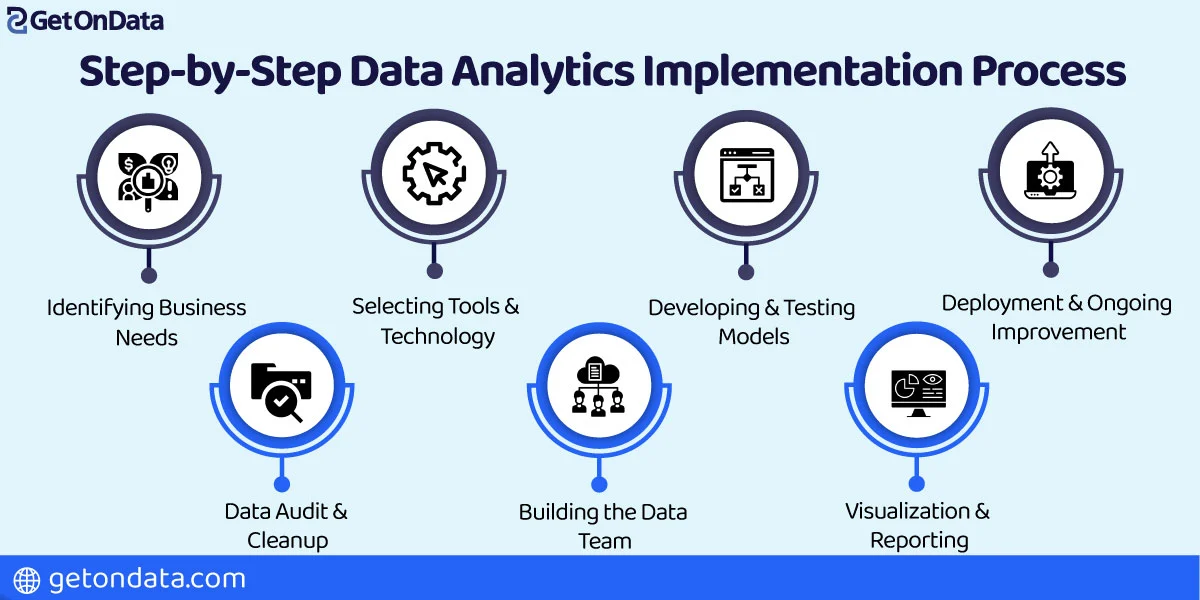
Step-by-Step Data Analytics Implementation Process
1. Understanding the Business Needs
• Define Objectives
A good data analytics implementation service process starts with well-defined objectives. Whether the goal is to increase revenue, optimize processes, or improve customer retention, organizations must define the precise business problems they wish to tackle. Goals must be reasonable, quantifiable, and in line with overarching strategy objectives. Setting up KPIs by data analytics service providers facilitates monitoring advancement and assessing achievement.
• Stakeholder Alignment
Stakeholder alignment guarantees that end users, department heads, IT teams, and leadership all understand the analytics objectives. Prior to execution, early cooperation aids in setting goals, allocating funds, and resolving issues. Adoption rates rise, and opposition falls when stakeholders participate in decision-making. Accountability is encouraged by defined duties, frequent updates, and open lines of communication. A smoother deployment and long-term success are ensured by strong alignment, which closes the gap between technical execution and business needs.
2. Data Audit & Preparation
• Identify Available Data Sources
Finding all relevant information sources within the company is the first stage in the data audit and preparation process. Knowing the location of data facilitates the removal of silos and guarantees thorough analysis. Data formats, ownership, accessibility, and update frequency should all be documented by teams. Better planning, more seamless integration, and a solid basis for precise and trustworthy analytics results are all made possible by a well-defined inventory of data sources.
• Assess Data Quality
Organizations must assess the data’s timeliness, accuracy, completeness, and consistency after determining its sources. Unreliable insights and poor decision-making are the results of poor data quality. Finding duplicates, missing values, discrepancies, and out-of-date records is aided by profiling exercises. Data satisfies corporate standards when quality benchmarks and validation guidelines are established. A comprehensive evaluation lowers future risks, enhances the legitimacy of reporting, and increases departmental trust in analytics-driven policies.
• Data Cleaning and Integration
To increase overall correctness, data cleaning involves fixing mistakes, eliminating duplicates, standardizing formats, and filling in missing values. Custom data analytics solutions are the process of merging data from several systems into a single location. Consistency between datasets is ensured via appropriate transformation and mapping. This stage facilitates smooth reporting and improves data usability. A single source of truth is provided by clean, integrated data, enabling businesses to provide insightful and useful business information.
3. Choosing the Right Tools and Technology
• Analytics Platforms
The complexity of the data, user needs, and corporate objectives all influence the choice of analytics platform. Advanced analytics and data manipulation are supported by data processing frameworks such as Python, R, and SQL. For various business teams, the ideal combination guarantees adaptability, scalability, and easily accessible information.
• Infrastructure Setup
Performance, security, and scalability are all greatly impacted by infrastructure considerations. Businesses need to decide whether to use cloud-based or on-premise analytics solutions at a data analytics services company. While on-premise installations provide you more control over your data, cloud platforms offer flexibility, reduced upfront expenses, and simpler scaling. Companies should also assess if a data lake or warehouse is more appropriate for their requirements. Smooth data processing, efficient storage, and dependable system performance are all guaranteed by a well-planned infrastructure.
• Consider Scalability and Budget
Selecting scalable solutions guarantees that analytics capabilities will increase in tandem with corporate growth. Businesses should evaluate long-term ROI, maintenance needs, installation costs, and license fees. Choosing technologies that meet both technical and budgetary needs is made easier by collaborating with knowledgeable data analytics service providers. Future expensive system replacements are avoided via scalable technologies. Achieving ongoing analytics success and maximizing corporate value over time requires striking a balance between performance, adaptability, and budgetary constraints.
Also Read: Choosing the Right Cloud-Based Analytics Tools for Your Industry Needs
4. Building the Data Team
• Key Roles
(ⅰ). Data Analysts:
To properly support operational and strategic business choices, interpret data, build dashboards, provide reports, and offer actionable insights.
(ⅱ). Data Engineers:
Create and manage data pipelines, oversee ETL procedures, and guarantee data scalability, dependability, and smooth system integration.
(ⅲ). Data Scientists:
To address difficult business problems, create predictive models, use machine learning techniques, and unearth cutting-edge insights.
(ⅳ). Business Analysts:
Collect requirements, establish KPIs, match business objectives with analytics projects, and facilitate communication between the business and technical teams.
• Define Responsibilities
Accountability throughout the data flow is ensured by clearly outlining duties. The ownership of data collection, storage, processing, modeling, visualization, and governance must be decided by the organizations. Roles that are documented save effort duplication and clear up team confusion. Collaboration and efficiency are also enhanced by establishing ownership. The total efficacy of the data analytics implementation process is strengthened by a clearly defined framework, which guarantees efficient workflow management.
• Outsource vs. In-House
Budget, experience, and long-term objectives all play a role in the decision between outsourcing and hiring an internal team. Deeper business knowledge, cultural alignment, and more control are provided by in-house teams. Outsourcing offers financial flexibility, quicker deployment, and access to specialized talents. It might, however, restrict the growth of internal knowledge. The best strategy for long-term analytics success is determined by assessing business demands, scalability requirements, and available resources.
5. Developing and Testing Analytics Models
• Select Analytical Methods
Business goals, data accessibility, and problem complexity all play a role in choosing the best data analytics services & solutions techniques. Businesses may employ prescriptive analytics to suggest courses of action, predictive analytics to foresee results, or descriptive analytics to comprehend historical trends. Selecting the right techniques guarantees precise insights and optimizes the data analytics project’s efficacy.
• Model Building and Testing
Dataset preparation, variable selection, algorithm training, and performance validation are all steps in the model development process. Reliability is assessed using performance criteria like precision, recall, and error rates. Thorough testing guarantees that the model functions properly in practical settings. Before complete deployment, accurate documentation and validation increase confidence in the analytics outcomes.
• Iterate Based on Feedback
After they are first deployed, analytics models shouldn’t stay unchanged. Accuracy and relevance are increased through ongoing iteration. Iterative enhancements guarantee analytics investments have a lasting impact and long-term benefit.
6. Visualization and Reporting
• Design Dashboards
Data presentation that is both clear and informative for various stakeholder groups is guaranteed by an effective dashboard design. While operational teams require real-time tracking and comprehensive information, executives might need high-level performance summaries. Dashboard customization according to user roles enhances usability and decision-making effectiveness. Stakeholders are better able to recognize problems, analyze patterns, and respond promptly when there are clear graphics, a user-friendly design, and useful KPIs.
• Automate Reports
Reports that are automated save time, minimize human mistakes, and guarantee that stakeholders are informed on time. Scheduled reports can be sent out on a daily, weekly, or monthly basis, based on what the business requires. When important benchmarks are reached or performance departs from expectations, automated alerts let teams know. This proactive strategy keeps reporting consistent, facilitates quicker decision-making, and enhances responsiveness without putting undue strain on internal personnel.
• Make Data Actionable
Data visualization should be more than just showing charts and data. Creating actionable insights that inform strategic choices is the main objective. In reports, make sure to clearly highlight trends, abnormalities, and performance gaps. When feasible, provide background, analogies, and suggestions. Analytics transforms from an informational tool to a potent tool for growth when stakeholders know what to do in response to findings.
7. Deployment and Continuous Improvement
• Implement the Solution
The organized advanced analytics services guarantee smoother adoption, reduce risk, and enable teams to address technical difficulties early. First, small-group testing aids in confirming functionality and performance. Stability is guaranteed, confidence is increased, and the organization is ready for full-scale deployment through gradual implementation.
• Monitor KPIs
Following implementation, companies need to keep a close eye on key performance metrics that match the initial business goals. Monitoring KPIs makes it easier to assess whether the analytics solution is producing the desired results. Frequent performance evaluations pinpoint areas in need of improvement, gaps, and optimization opportunities. Using analytics technologies, ongoing monitoring keeps teams accountable and guarantees alignment with changing business strategies.
• Feedback Loops
By creating feedback loops, users are encouraged to provide comments on performance, usability, and other needs. Over time, gathering feedback from stakeholders aids in improving dashboards, reports, and data procedures. User happiness and system efficiency are enhanced by frequent upgrades that are based on feedback. The analytics framework is kept current, flexible, and in line with shifting business objectives and consumer needs through constant improvement.
⇒ Common Challenges in Data Analytics Implementation
• Poor data quality
The biggest complications in opting for data analytics are poor data quality. Missing values, inconsistent formats, redundant entries, and out-of-date data can all have a big impact on insights and decision-making. Inaccurate and uncontaminated data causes analytics systems to produce false reports. Standardized data management procedures, validation procedures, and data cleansing are necessary investments for organizations to guarantee dependable results and credible business information across divisions.
• Lack of skilled professionals
It takes competent data scientists, analysts, and engineers to deploy data analytics successfully. However, it’s tough for businesses to find and keep tool-savvy professionals. Delays, underutilized tools, and inadequate analysis are caused by a lack of talent. Upskilling initiatives, targeted hiring, and ongoing training help close the skills gap and optimize analytical expenditures.
• Resistance to data-driven culture
Management and employees may find it difficult to embrace analytics-driven decision-making because they are committed to using more conventional approaches. Data efforts frequently fail in the absence of cultural congruence and leadership support. Teams are encouraged to trust data insights through raising awareness and offering appropriate training. Transparency, accountability, and more intelligent strategic choices are promoted throughout the company by a robust data-driven culture.
• Integration issues
CRM, ERP, marketing automation, and legacy databases are just a few of the many platforms that organizations frequently utilize. Technical constraints, mismatched formats, and data silos prevent smooth integration. Analytics projects may stagnate in the absence of adequate planning and scalable design. Integration issues can be successfully resolved by utilizing centralized data warehouses, utilizing APIs, and selecting suitable technologies.
Also Read: Unlocking the Benefits of Data Analytics: Driving Innovation and Profitability
➱ Best Practices for Successful Implementation
☑ Start small and scale gradually
Organizations can evaluate analytics capabilities without over-reliance on resources by starting with a targeted pilot project, prior to expanding. Small-scale implementation aids in gap identification, ROI measurement, and strategy refinement. Businesses can progressively expand analytics across departments if it has been shown to be effective. In addition to optimizing long-term performance and investment returns, this staged strategy lowers risks, guarantees improved stakeholder buy-in, and fosters confidence in analytics projects.
☑ Involve stakeholders early
Aligning company goals with analytics objectives is ensured by involving important stakeholders early on. Collaboration among end users, IT teams, and leadership ensures that initiatives are successful and meet actual business demands. Gathering requirements, allocating resources, and increasing acceptance rates are all enhanced by early involvement. Additionally, communication and feedback loops foster trust and provide a common goal for advanced analytics services.
☑ Maintain data governance
Data accountability, consistency, and accuracy are guaranteed by effective data governance. Roles and responsibilities are defined by governance frameworks, which guarantee adherence to both internal and external laws. Organizations may safeguard data integrity, improve transparency, and establish analytics-driven decision-making.
☑ Focus on data security and compliance
Security is a necessity when managing crucial customer and corporate data in data analytics. To protect data assets, organizations need to have encryption, access limits, frequent audits, and monitoring tools in place. To reduce legal concerns, adherence to laws like the HIPAA and the GDPR is crucial. A proactive security approach by a data analytics services company fosters trust and stops breaches.

Ready to Turn Data into Decisions? Let’s Build Your Analytics Strategy Together
Data analytics implementation relies on a framework to gather, structure & interpret information into actionable insights. As per the current competitive environment, customer demands are rising like a skyrocket. Relying on a data analytics services company isn’t considered a choice but is crucial for success.

